
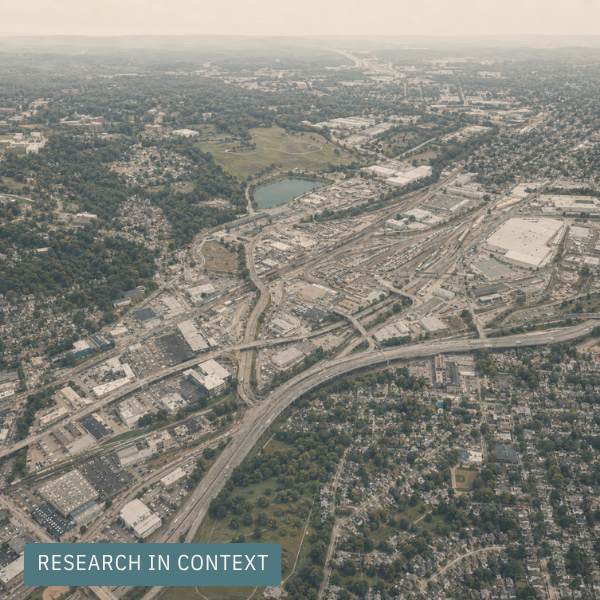
Tracing exposure through everyday environments
Some conditions do not arrive as a single event. Air pollution, food access, infrastructure, and daily routines can make place part of the exposure itself.

Using neighborhood archetypes to understand unequal outcomes
Neighborhood data can make patterns visible, but it can also flatten them. Neighborhood archetypes offer a way to understand place as a combination of conditions, not a single variable on a map.
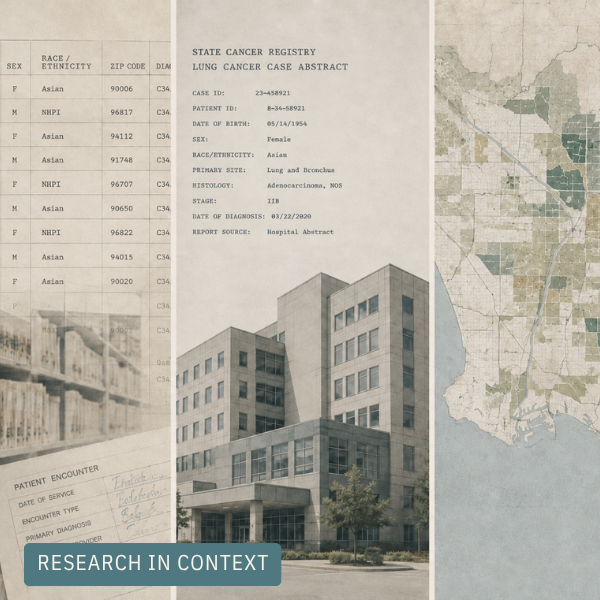
Linking healthcare data, public data, and place
This piece looks at research grounded in healthcare data, public health, and applied statistics, and shows how the underlying work carries far beyond healthcare. Across these studies, the real task was bringing together scattered forms of information to better understand patterns, place, and lived conditions.